
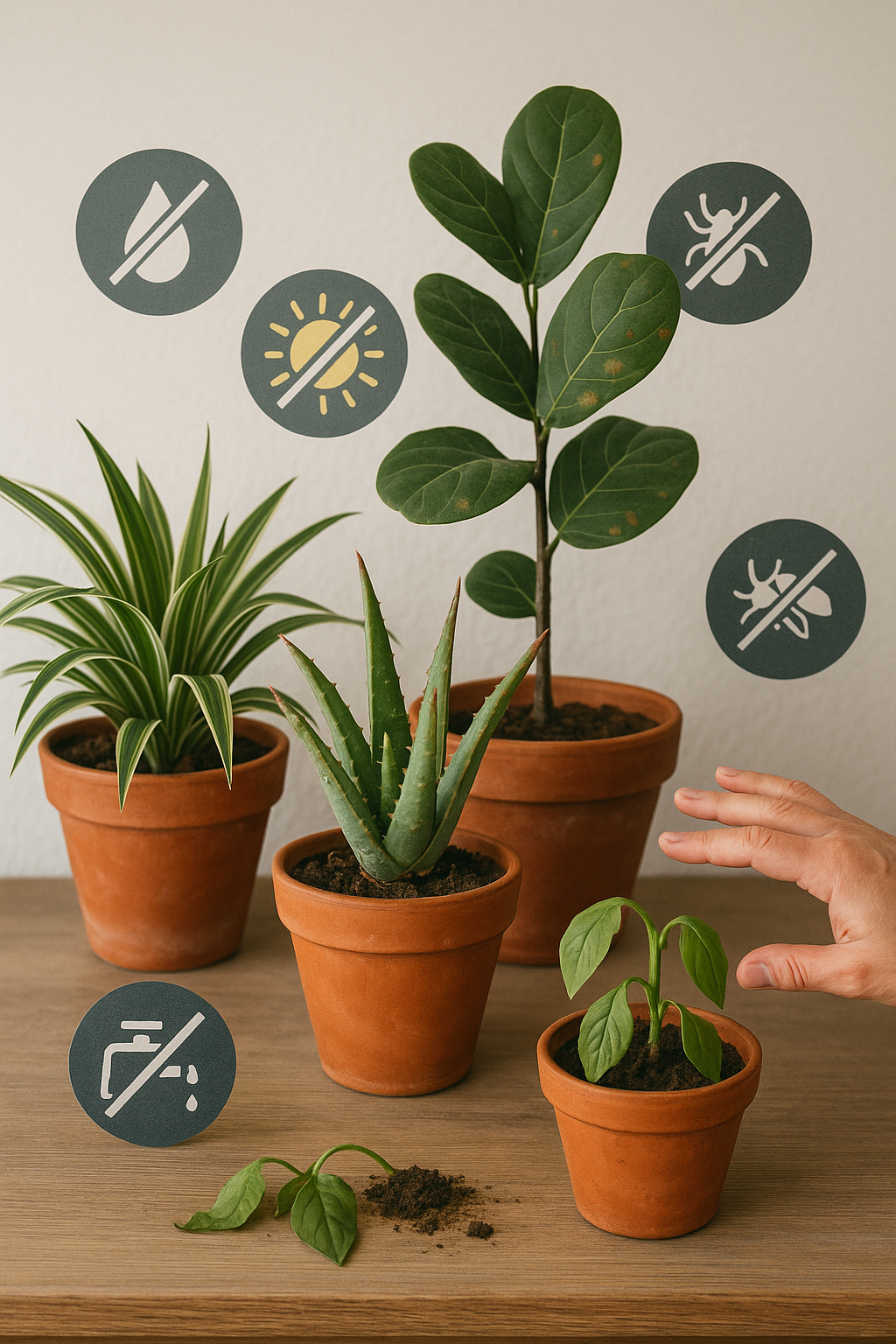
Keeping houseplants healthy and thriving may seem easy at first glance, but many beginners — and even experienced plant lovers — make common mistakes that can harm their plants over time. Understanding what not to do is just as important as knowing what to do. In this article, we’ll explore some of the most frequent mistakes people make when caring for indoor plants and how to avoid them, helping you create a happy and flourishing indoor garden.
One of the most frequent mistakes is overwatering. Many people assume that more water means a healthier plant, but in reality, overwatering is one of the leading causes of root rot and plant death. Each plant has specific water requirements, and factors such as pot size, light exposure, and temperature all influence how often you should water. As a general rule, always check the top inch of soil before watering. If it still feels damp, wait a little longer. Also, ensure your pots have drainage holes to let excess water escape, preventing the roots from sitting in water.
The opposite problem, underwatering, is also very common. It often happens with busy individuals or with plants placed in low-traffic areas of the home where they are forgotten. Symptoms of underwatering include dry, crispy leaves, drooping stems, and soil pulling away from the edges of the pot. The key to avoiding both overwatering and underwatering is consistency and observation. Create a watering schedule based on each plant’s needs, and adjust it seasonally as indoor conditions change.
Another mistake is placing plants in the wrong lighting conditions. Every plant has unique light requirements. Some plants, like succulents and cacti, need bright, direct sunlight. Others, like ferns or snake plants, prefer indirect or low light. A plant in the wrong spot can become leggy, pale, or stop growing altogether. One way to avoid this is to research the light needs of each plant before placing it in your home. Watch how natural light enters your space during the day and move your plants accordingly. If natural light is limited, consider using grow lights as a supplement.
Using the wrong pot size or type can also be damaging. A pot that’s too small can restrict root growth and dry out too quickly, while a pot that’s too large can hold too much moisture, leading to rot. Moreover, pots without drainage holes can trap excess water, putting your plant at risk. Always choose a pot that fits the current size of the plant and provides proper drainage. When repotting, move up only one or two inches in diameter to avoid overwhelming the plant with too much space.
Neglecting to clean or inspect your plants is another easy-to-make mistake. Dust can accumulate on leaves, especially for indoor plants near windows or in dry environments. This layer of dust can block sunlight and reduce photosynthesis. Insects like spider mites, aphids, or scale can also go unnoticed if you don’t inspect your plants regularly. Get into the habit of wiping leaves with a damp cloth and checking the underside of leaves and stems for pests or mold.
One of the more subtle mistakes is using the wrong type of soil. Not all plants thrive in the same type of growing medium. Succulents and cacti need a well-draining mix, while tropical plants prefer soil that retains moisture but drains well. Using heavy, dense soil in a pot without drainage can cause major problems for many houseplants. Always use a potting mix suitable for your plant type and avoid using regular garden soil, which may contain pests and lack proper aeration.
Ignoring seasonal changes can also affect your plant’s health. In winter, most indoor plants enter a resting phase and require less water and fertilizer. If you continue with the same care routine as in summer, you may overwhelm them. Pay attention to temperature changes, humidity, and how much sunlight your space receives during different times of the year. Move sensitive plants away from cold drafts or direct heaters, and consider using a humidifier if your home becomes too dry.
Using too much fertilizer is another common error. While fertilizers can encourage growth, over-fertilizing can cause a build-up of salts in the soil, leading to root burn and nutrient imbalances. Signs of over-fertilizing include brown tips on leaves, yellowing, or white crust on the soil surface. Always follow the instructions on the fertilizer package and use it sparingly. Most houseplants only need to be fertilized during their active growing seasons — typically spring and summer.
Another overlooked mistake is constantly moving plants around the house. While it might be tempting to rearrange your space frequently, many plants need time to adjust to their environment. Changing their location too often can stress them out, especially if they are moved to areas with different light or humidity levels. Try to find a good spot for each plant and keep it there unless it’s not thriving.
Lastly, not learning about the plant’s natural habitat can lead to mismatched care. Each plant comes from a unique environment — deserts, rainforests, mountains — and mimicking that environment as closely as possible indoors will help your plant thrive. Do some research on where your plant originates and adjust your care accordingly. This could mean adjusting light, humidity, watering frequency, or even companion planting.
Caring for houseplants doesn’t have to be complicated, but avoiding these common mistakes is essential for long-term success. The more you understand your plant’s individual needs, the more rewarding your indoor gardening experience will be. Pay attention to the signs your plant gives you, adjust your routine as needed, and enjoy the journey of learning and growing alongside your green companions.