
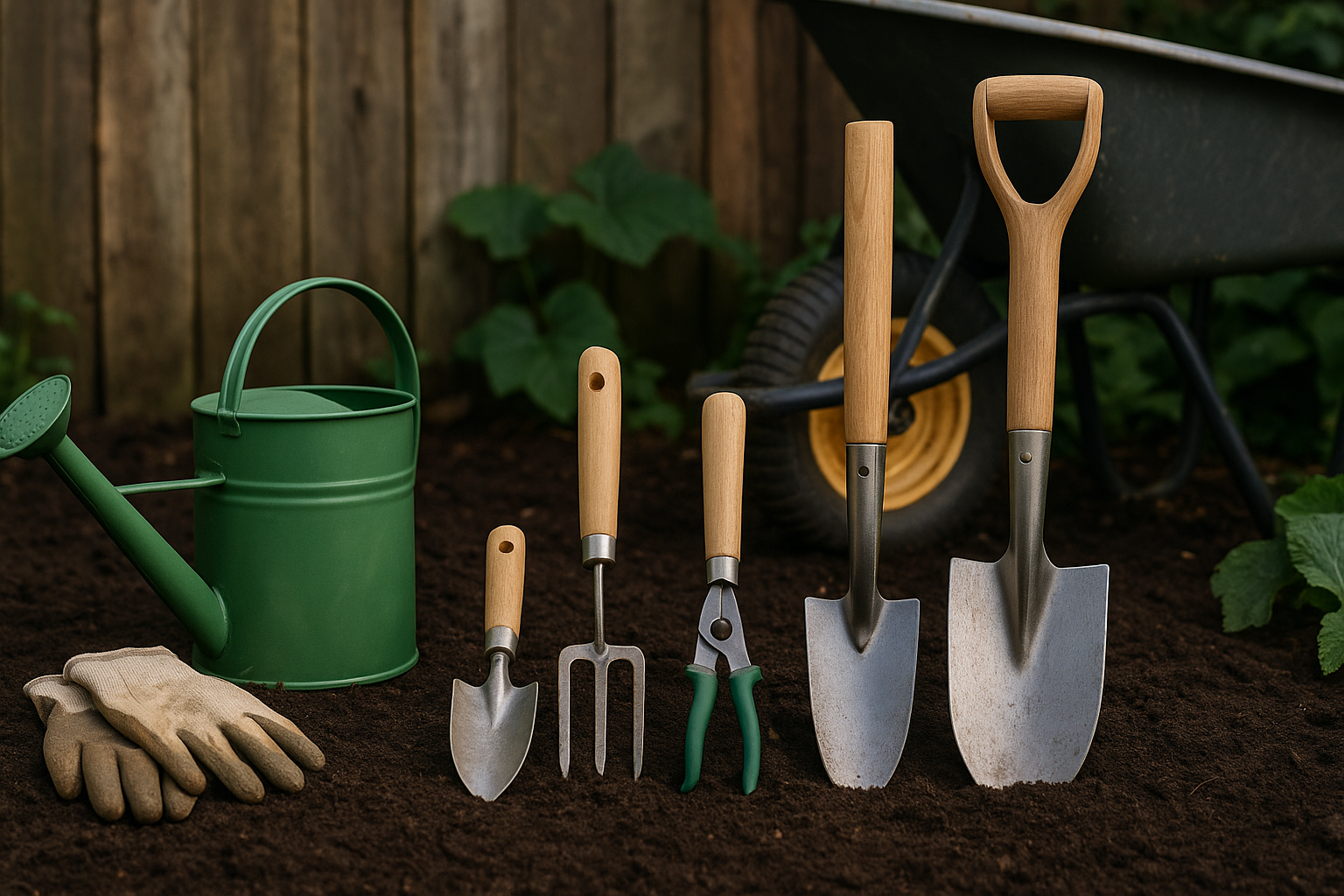
Whether you’re starting your first garden or looking to improve your gardening skills, having the right tools can make a world of difference. A well-equipped gardener is not only more efficient but also more effective at maintaining healthy plants and an organized garden space. Fortunately, you don’t need an entire shed full of gear to get started. Just a few essential tools can help you take care of your garden with ease and confidence.
Hand Trowel
A hand trowel is one of the most versatile and frequently used tools in gardening. It’s perfect for digging small holes, transplanting seedlings, removing weeds, and adding fertilizer or compost around plants.
When choosing a hand trowel, look for one with a comfortable, ergonomic grip and a strong, rust-resistant blade. A slightly pointed tip makes it easier to dig into compact soil. Stainless steel blades offer durability and long-term performance.
Pruning Shears (Secateurs)
Pruning shears are essential for keeping your plants healthy and encouraging new growth. They help you trim dead or damaged branches, shape shrubs, and harvest flowers or herbs.
There are two main types of pruning shears:
- Bypass pruners: These work like scissors and are best for live plants and soft stems.
- Anvil pruners: These have a straight blade that cuts against a flat edge and are ideal for dry or woody stems.
Keep your shears clean and sharp to prevent disease spread and ensure smooth cuts.
Garden Gloves
Protecting your hands while gardening is important. A good pair of gloves will shield your skin from blisters, cuts, soil bacteria, and insect bites. They also provide a better grip when handling tools or prickly plants.
Choose gloves made from breathable but durable material. For tasks like pruning roses or handling thorny plants, consider heavy-duty leather gloves. For general planting and weeding, lightweight gloves with a snug fit are ideal.
Watering Can or Hose with Adjustable Nozzle
Proper watering is crucial for plant health, and having the right tool makes it much easier. A watering can is perfect for smaller gardens, container plants, and delicate seedlings. It gives you control over water flow and allows you to reach tight spots.
If you have a larger garden, a hose with an adjustable spray nozzle is a better option. Look for a nozzle with multiple settings—gentle mist for seedlings, stronger streams for mature plants.
Always water early in the morning or late in the afternoon to reduce evaporation and give your plants time to absorb moisture.
Garden Fork
A garden fork is excellent for breaking up compacted soil, turning compost, and aerating planting beds. Its sturdy tines penetrate tough soil more easily than a shovel and help improve drainage and root development.
Choose a fork with a strong handle (wood or fiberglass) and sharp, stainless-steel tines. A D-handle provides extra grip and leverage when working with heavy soil.
Spade or Shovel
Every gardener needs a good spade or shovel for digging, edging, and moving soil or compost. A spade has a flat, square blade and is best for slicing through soil and roots, while a shovel has a curved blade ideal for scooping and moving materials.
Look for a tool that’s the right height for your body to prevent back strain. A steel blade with a reinforced handle ensures durability for tougher jobs.
Garden Rake
A garden rake is essential for leveling soil, removing debris, and spreading mulch or compost. It helps create an even surface before planting and can be used to break up clumps of soil or remove leaves and weeds.
There are two main types:
- Bow rake: Used for soil and gravel.
- Leaf rake: Used for collecting leaves and light debris.
Having both types can be helpful depending on the kind of gardening you do.
Hoe
A hoe is perfect for weeding and cultivating soil between plants. It allows you to break up the soil surface, remove shallow-rooted weeds, and shape garden beds. Hoes come in different shapes, such as draw hoes, stirrup hoes, and Dutch hoes—each designed for specific tasks.
Choose one with a long handle to reduce bending and strain on your back.
Wheelbarrow or Garden Cart
If you need to move soil, mulch, compost, or heavy pots, a wheelbarrow or garden cart is extremely helpful. It saves time and reduces physical strain by allowing you to transport materials easily across your garden.
Consider the size of your garden and storage space before choosing. Two-wheeled carts offer better stability, while traditional single-wheeled barrows provide more maneuverability.
Soil Tester
A soil tester may not be the first tool that comes to mind, but it’s incredibly useful. It helps you determine the pH level and nutrient content of your soil, which is crucial for choosing the right plants and fertilizers.
Simple kits are available at garden centers, or you can opt for digital testers that provide quicker and more accurate results.
Bonus: Kneeling Pad or Garden Stool
Gardening often involves kneeling, bending, and sitting for long periods. A cushioned kneeling pad or a foldable garden stool with storage can make gardening much more comfortable. Some models even convert from a stool to a kneeler, offering two functions in one.
This small addition can help prevent sore knees and back pain, making gardening more enjoyable for longer periods.
Invest in Quality, Not Quantity
When building your gardening toolkit, it’s better to invest in a few high-quality tools that will last for years rather than buying cheap versions that break easily. Take care of your tools by cleaning them after use, storing them in a dry place, and sharpening blades regularly.
Over time, you can add more specialized tools as your garden grows or as your interests expand into areas like pruning trees or growing vegetables.
Equipped for Success
Having the right tools doesn’t just make gardening easier—it makes it more enjoyable. With this list of basic gardening tools, you’ll be well-equipped to start, maintain, and expand your home garden. From digging and planting to watering and harvesting, the right equipment empowers you to create a thriving green space you’ll be proud of.