
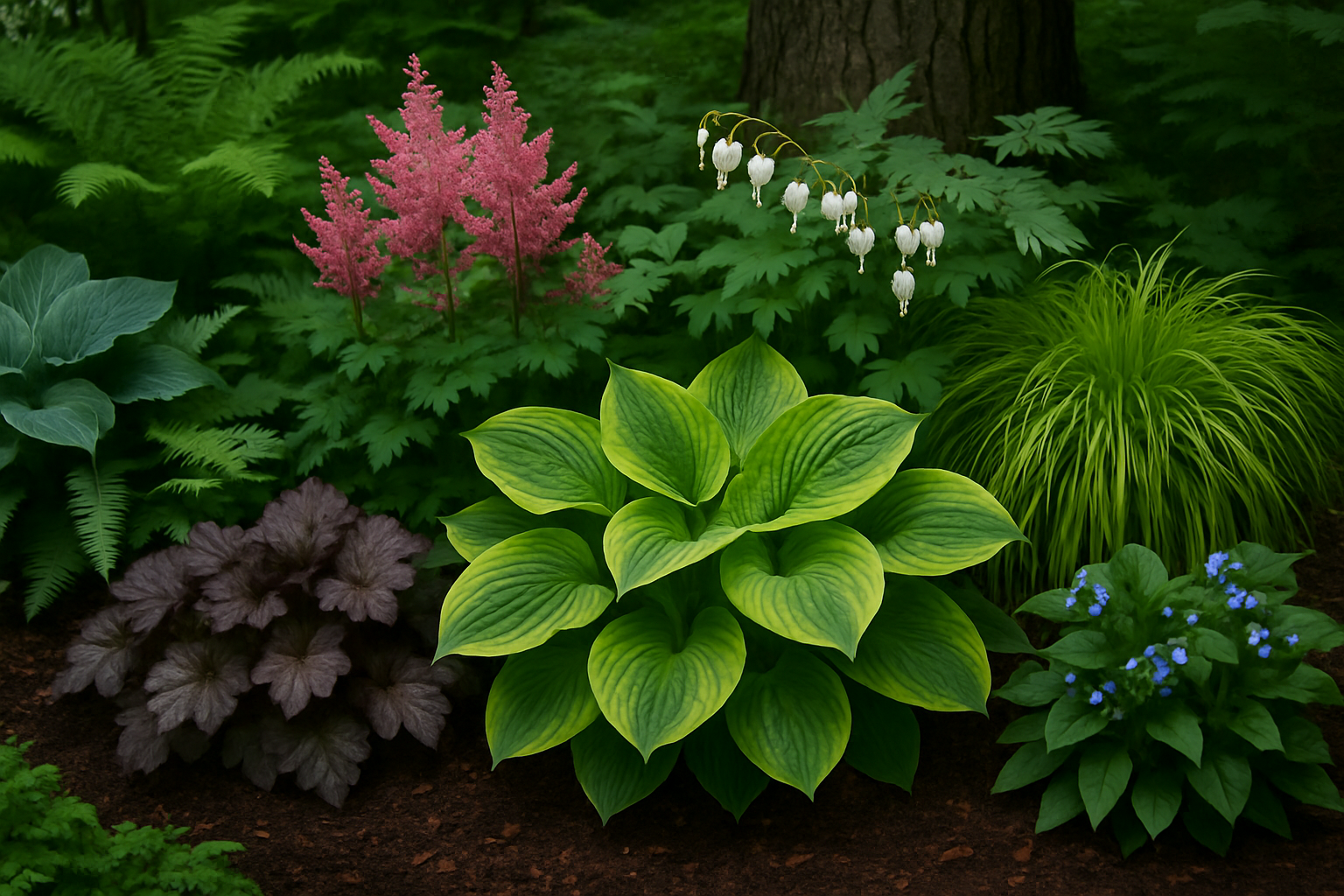
Not all gardens are blessed with full sunlight, but that doesn’t mean they can’t be lush, vibrant, and full of life. Shady areas—whether under trees, alongside buildings, or on the north side of your house—can still support a beautiful variety of plants. The key is choosing species that thrive in low-light conditions. In this article, you’ll discover some of the best plants for shady gardens and how to help them flourish.
Understanding Shade Levels
Before planting, it’s important to understand the type of shade in your garden. Different plants tolerate different levels of light:
- Full shade: Less than 3 hours of direct sunlight per day (e.g., under dense trees or structures).
- Partial shade: 3 to 6 hours of sunlight, typically in the morning or filtered through leaves.
- Dappled shade: Light that filters through tree branches throughout the day.
- Light shade: Areas with reflected or indirect sunlight for most of the day.
Knowing your shade type helps you choose the right plants that won’t struggle or grow weak due to lack of light.
Best Flowers for Shady Gardens
1. Hostas
Hostas are classic shade plants known for their lush foliage. They come in a variety of sizes and colors—from deep green to blue-gray and variegated varieties.
- Light needs: Full to partial shade
- Bonus: Tolerates damp conditions and returns year after year
2. Astilbe
Astilbe adds texture and color with its feathery plumes of pink, red, white, or lavender flowers.
- Light needs: Partial to full shade
- Bonus: Attracts pollinators and thrives in moist soil
3. Bleeding Heart (Dicentra)
This plant is famous for its heart-shaped flowers that dangle from delicate stems in spring.
- Light needs: Partial to full shade
- Bonus: A charming focal point for woodland gardens
4. Impatiens
Perfect for shady containers and beds, impatiens bloom non-stop with bright reds, pinks, whites, and purples.
- Light needs: Partial to full shade
- Bonus: Long flowering season and easy to grow
5. Begonias
Begonias offer both stunning flowers and interesting foliage, ideal for shady garden beds or hanging baskets.
- Light needs: Partial shade
- Bonus: Many varieties, including tuberous and wax begonias
6. Toad Lily (Tricyrtis)
This lesser-known plant blooms in late summer to fall with orchid-like spotted flowers.
- Light needs: Full to partial shade
- Bonus: Adds interest when most shade plants are done blooming
Best Foliage Plants for Shade
7. Ferns
From Boston to Maidenhair ferns, these plants are perfect for moist, shady areas. Their textures add elegance to any garden.
- Light needs: Full to partial shade
- Bonus: Low maintenance and deer-resistant
8. Heuchera (Coral Bells)
These plants are grown for their colorful foliage in shades of burgundy, bronze, lime, and even silver.
- Light needs: Partial shade
- Bonus: Small flowers attract hummingbirds
9. Lungwort (Pulmonaria)
A unique plant with spotted leaves and clusters of blue, pink, or white flowers in early spring.
- Light needs: Full to partial shade
- Bonus: Drought-tolerant once established
10. Japanese Forest Grass (Hakonechloa)
A beautiful ornamental grass with graceful, arching blades—often golden or variegated.
- Light needs: Partial to full shade
- Bonus: Great ground cover for shady borders
Best Edible Plants for Shade
While most vegetables prefer sun, there are a few edibles that tolerate partial shade well:
11. Lettuce
Leafy greens like lettuce grow well in partial shade, especially in hot climates.
- Light needs: 3–5 hours of sun
- Bonus: Slower to bolt in the shade
12. Spinach
This cool-season green thrives with limited sunlight and prefers cooler conditions.
- Light needs: 3–4 hours of sun
- Bonus: Fast-growing and nutrient-dense
13. Chard
Swiss chard produces large, colorful leaves and can tolerate partial shade.
- Light needs: 4–5 hours of sun
- Bonus: Cut-and-come-again harvests
14. Parsley
This herb grows well in containers or beds and doesn’t mind lower light levels.
- Light needs: 3–6 hours of sun
- Bonus: Easy to grow indoors or out
Tips for Success in Shady Gardens
Improve Soil Quality
Shade gardens often have compact or dry soil due to tree roots. Add compost or organic matter to improve structure and water retention.
Water Wisely
Shady areas may stay moist longer, so be careful not to overwater. However, tree-covered zones may also dry out quickly due to root competition. Monitor soil moisture closely.
Use Mulch
Mulch helps retain moisture and suppresses weeds—both important in low-light areas where competition for resources is high.
Prune Trees for Dappled Light
If you’re gardening under trees, consider light pruning to let in more filtered sunlight. Don’t remove major branches—just thin out dense areas.
Brighten with Foliage
Since shady gardens don’t always produce abundant flowers, choose plants with colorful or textured leaves to add visual interest.
Think Vertical
Use shady walls, fences, or trellises to grow climbing shade-tolerant plants like ivy, climbing hydrangea, or clematis.
Shade Can Be a Garden’s Best Friend
Gardens don’t need full sun to be full of life. With the right plant choices and a little care, even the shadiest corners of your yard can be transformed into lush, inviting spaces. From bright blooms to bold foliage, these shade-loving plants prove that low light is no limitation—just a new opportunity to grow beautifully.