
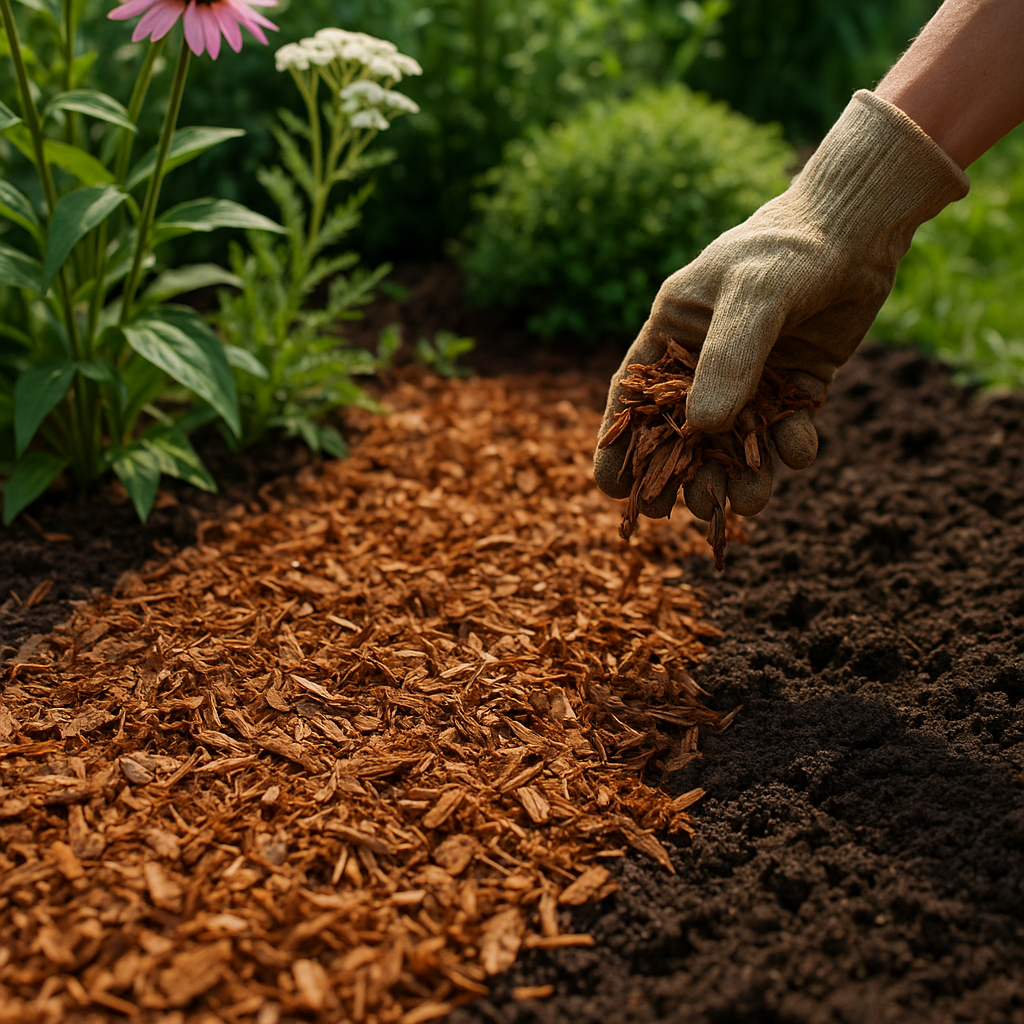
Mulch is one of the simplest and most effective tools for creating a healthy, productive, and attractive garden. Whether you’re growing vegetables, flowers, shrubs, or trees, mulch helps reduce maintenance while enhancing the overall quality of your soil. However, using mulch effectively requires more than just spreading it over your soil. The type of mulch you choose, where you place it, how thick you apply it, and how you maintain it throughout the year can all influence the health of your plants and the long-term success of your garden. In this guide, you’ll learn how to make the most of mulch and avoid common mistakes.
At its core, mulch is any material spread over the surface of the soil. It can be organic—meaning it comes from natural materials like wood, leaves, and straw—or inorganic, like gravel, rubber, or landscape fabric. Gardeners use mulch for a variety of reasons. First, it helps conserve moisture by reducing evaporation from the soil surface, meaning you won’t need to water your garden as often, especially during hot weather. Second, it helps regulate soil temperature, keeping roots cooler in summer and warmer in winter. Third, mulch helps suppress weed growth by blocking sunlight, making your life a lot easier. Lastly, organic mulch improves soil fertility and structure as it breaks down over time.
There are many types of mulch, and each serves a different purpose. Organic mulches include shredded bark, wood chips, straw, grass clippings, pine needles, leaves, compost, and even newspaper. These materials are excellent for enriching the soil. Shredded bark and wood chips are especially popular in flower beds and around trees and shrubs because they look tidy and break down slowly. Straw is ideal for vegetable gardens, offering a light and effective barrier that also decomposes nicely. Grass clippings, if not treated with chemicals, can be used in thin layers, though they may smell or mat if applied too thickly. Pine needles are slow to break down and work well for acid-loving plants like blueberries or azaleas. Fallen leaves, especially when shredded, make great mulch for beds or around trees. Compost can also be used as a mulch and adds nutrients immediately to the soil.
Inorganic mulches don’t break down, so they don’t feed your soil, but they’re useful in areas where long-term weed suppression or moisture retention is the goal. Examples include gravel, pebbles, rubber mulch, black plastic, and landscape fabric. These are especially useful in walkways or decorative beds where plant turnover is low. Gravel and stones can also help with drainage issues, though they may reflect heat in warmer climates. Landscape fabric is good under pathways or beneath stone mulch, but it’s less ideal for areas where you’ll be planting and digging often.
When applying mulch, start by clearing the area of weeds and debris. It’s important to remove existing weeds because mulch won’t kill established ones. Then, water the soil thoroughly. You want to trap moisture under the mulch layer to benefit plant roots. Spread mulch evenly to a depth of about two to three inches. If you use less, weeds might still break through; if you use more, it can suffocate the roots and encourage rot. One of the most important rules of mulching is to avoid piling mulch against plant stems or tree trunks. This common mistake—sometimes called a “mulch volcano”—traps moisture and invites disease and pests. Always leave a gap of a few inches around the base of plants and trees.
Different garden areas benefit from mulch in unique ways. In vegetable gardens, straw or shredded leaves help keep the soil moist and prevent mud splashing onto plants during rain. Around flowers, bark mulch not only prevents weeds but also gives the bed a clean, polished appearance. For trees and shrubs, mulch rings reduce lawnmower damage and stabilize moisture levels around roots. Even in pathways, mulch can serve as a soft surface that controls weeds and erosion—bark chips or gravel work especially well for this.
There are also seasonal considerations when mulching. In spring, refresh mulch that has broken down over winter. This is a great time to apply a new layer to warm the soil and prevent early weeds. During summer, mulch helps keep the soil cool and moist. In very hot regions, consider using light-colored mulch to reflect heat. In fall, mulch can insulate plant roots and protect them from sudden drops in temperature. Shredded leaves or pine straw are ideal during this time. In cold climates, mulch is especially important in winter for protecting perennial plants. After the first frost, apply a thicker layer of mulch to reduce the effects of freeze-thaw cycles, which can heave plants out of the ground.
When choosing the right mulch, consider your climate, the needs of your plants, your aesthetic preferences, and how much maintenance you’re willing to do. For example, if your goal is long-term weed suppression with minimal upkeep, bark or gravel might be best. If you want to build soil health in a vegetable garden, compost or straw will serve you better. If you have access to free materials like leaves, grass clippings, or pine needles, they can save money and reduce waste.
There are also some common mistakes to avoid. Over-mulching is one of the biggest issues. It might seem like more mulch equals more benefits, but too much mulch can suffocate roots and prevent water from reaching the soil. Another mistake is using dyed or chemically treated mulch around edibles. While colored mulch can look nice in ornamental beds, it’s safer to stick with untreated materials near your fruits, vegetables, and herbs. Finally, don’t forget to replenish organic mulch as it breaks down. This is a sign that it’s improving your soil, but you’ll need to top it off once or twice a year to maintain coverage and effectiveness.
If you’re looking for DIY mulch ideas, look no further than your own yard or kitchen. Shredded newspaper can be used as a base layer under another mulch type. Cardboard boxes, laid flat and dampened, make excellent weed barriers in new beds. Dry grass clippings, untreated sawdust, and even ground-up corncobs can be used creatively, as long as they’re applied properly and not too thick.
Using mulch effectively means understanding the specific needs of your plants, your climate, and your gardening goals. With a thoughtful approach, mulch becomes more than just a covering—it’s a tool that builds better soil, supports healthier plants, and makes gardening easier and more enjoyable. Whether you have a large backyard or a small raised bed, using the right mulch in the right way can dramatically improve your garden’s performance and beauty all year round.