
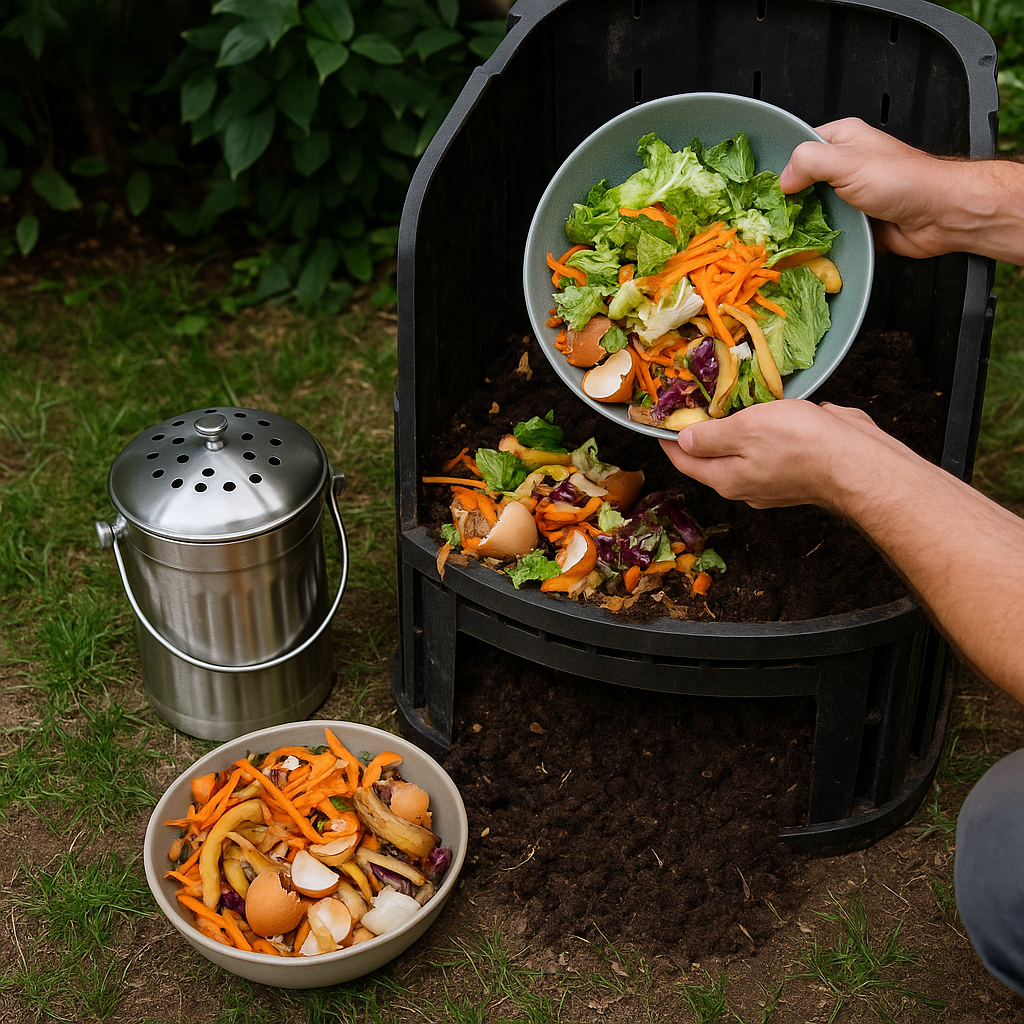
Creating your own compost is one of the most rewarding and sustainable practices any gardener can adopt. Composting turns everyday kitchen scraps and yard waste into nutrient-rich soil that can significantly improve the health of your garden. It reduces landfill waste, saves money on fertilizers, and supports a natural cycle of growth and renewal. Whether you have a large backyard or a small apartment balcony, composting is accessible to everyone. In this article, you’ll learn everything you need to know to start composting at home—from choosing the right method to maintaining a healthy, productive compost pile.
At its simplest, composting is the process of breaking down organic materials into a dark, crumbly, and earthy-smelling substance that is full of beneficial microorganisms. These microorganisms help release nutrients into the soil, improve soil texture, and boost plant health. Compost is often called “black gold” for a reason—it brings life to everything you grow.
To start composting at home, you’ll need to understand the basics of what to compost and how the process works. All compost systems rely on a balance of two main types of material: greens and browns. Greens are rich in nitrogen and include things like fruit and vegetable scraps, coffee grounds, tea bags, and grass clippings. Browns are rich in carbon and include dried leaves, paper, cardboard, sawdust, and straw. For your compost pile to break down efficiently, you need a healthy mix of both. A good rule of thumb is to aim for roughly three parts brown to one part green. Too much green material can create a wet, smelly pile, while too much brown can slow down the decomposition process.
Choosing the right composting method depends on your space, lifestyle, and goals. For backyard composting, you can build a simple open pile or use a compost bin. Tumbling compost bins are great for speeding up decomposition because they make it easy to mix the contents and maintain airflow. If you live in an apartment or want an indoor option, consider vermicomposting. This method uses worms—usually red wigglers—to break down food scraps quickly and odorlessly in a contained bin. Another option is bokashi composting, which involves fermenting kitchen waste using special bran and a sealed container. It’s fast, compact, and ideal for people who want to compost meat or dairy, which are typically avoided in traditional compost systems.
Once you’ve chosen your compost system, begin collecting your kitchen scraps and yard waste. Keep a small bin or container in your kitchen to collect food waste throughout the day. You can store it in the fridge or freezer to prevent odors until you’re ready to add it to your compost pile. When adding to the pile, always try to mix your greens and browns together rather than layering them. Shredding or chopping materials into smaller pieces will help them break down faster. For outdoor piles, keep them moist—about the consistency of a wrung-out sponge—and turn them every few weeks to provide oxygen, which is essential for the microorganisms doing the work.
There are a few things you should avoid putting in your compost. Meat, dairy, oily foods, and cooked food can attract pests and create foul odors. Pet waste, especially from meat-eating animals, can carry harmful pathogens and should be avoided unless you have a specialized composting system. Diseased plants or plants treated with herbicides can also be problematic, as they may spread disease or contain harmful chemicals. Glossy or colored paper, synthetic fabrics, and plastic-coated cardboard should also stay out of the pile.
As your compost breaks down, you’ll notice the pile heating up—this is a good sign. The heat is generated by microbial activity and can reach up to 60°C (140°F) in a well-maintained pile. After several weeks to a few months, depending on the method and conditions, your compost will be ready. Finished compost is dark brown, crumbly, and smells like rich earth. You shouldn’t be able to recognize any of the original materials, except perhaps a few stubborn twigs or eggshell pieces.
Once your compost is ready, you can use it throughout your garden. Mix it into garden beds to enrich the soil before planting. Use it as mulch around flowers and vegetables. Blend it into potting mix for container plants, or add it to the base of shrubs and trees. Compost improves soil structure, retains moisture, feeds beneficial soil organisms, and provides a slow-release source of nutrients. Unlike chemical fertilizers, compost won’t burn plant roots or pollute waterways—it works in harmony with nature.
Maintaining your compost pile is simple once you get the hang of it. Regularly check the moisture level and add water if it’s too dry. If it smells bad or gets too wet, add more browns like shredded newspaper or dry leaves and turn the pile to increase airflow. If decomposition seems slow, try chopping up inputs more finely or increasing the ratio of greens. In cold climates, composting slows down in winter but can still continue at a slower pace. You can also insulate your bin with straw or leaves to keep it active longer.
Composting is not just a garden practice—it’s a lifestyle change that reconnects you with natural cycles. Every banana peel, coffee filter, or pile of raked leaves that you divert from the trash becomes a gift to your garden and the planet. Even if you only compost a portion of your organic waste, you’re making a meaningful contribution to reducing landfill use, lowering greenhouse gas emissions, and nurturing healthier soil in your own backyard.
Whether you have a big garden or a small balcony, composting is something everyone can do. It doesn’t require fancy equipment, just a little effort and consistency. And once you see your kitchen scraps transform into rich, dark compost that fuels new life in your garden, you’ll understand why so many gardeners consider it one of the most satisfying parts of growing.