
Gardening doesn’t have to be expensive. In fact, some of the best tools and materials you can use are already in your home. Reusing household items in the garden not only saves money but also reduces waste and promotes sustainability. With a little creativity, you can turn everyday objects into valuable resources that support your garden’s health and beauty. In this article, you’ll discover practical and clever ways to repurpose items you might otherwise throw away.
Why Reuse in the Garden?
Repurposing materials in the garden helps:
- Reduce landfill waste
- Cut down on gardening costs
- Stimulate creativity and DIY skills
- Personalize your garden space
- Promote eco-friendly habits
Many common household items can find a second life as plant containers, garden tools, soil boosters, or pest deterrents.
Containers and Planters
1. Plastic Bottles
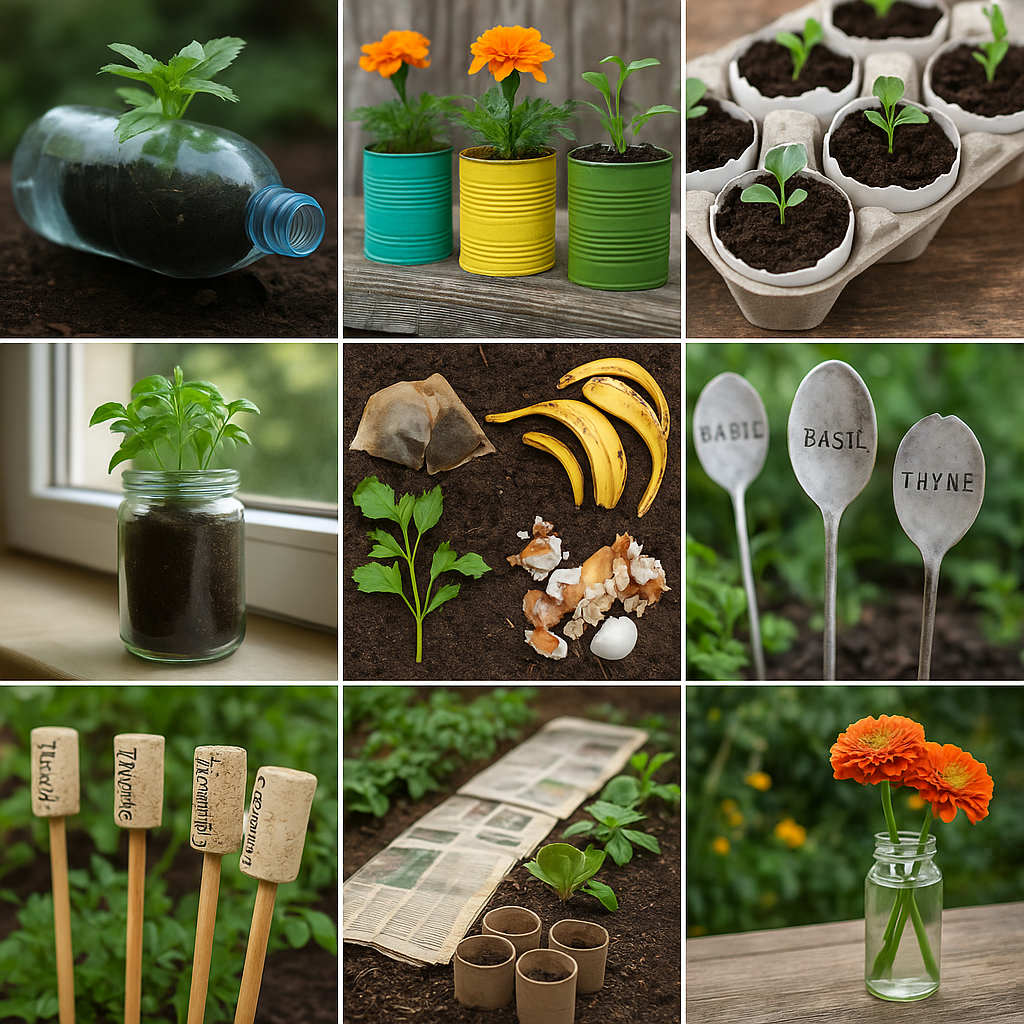
Cut off the tops to create mini pots or cut in half lengthwise to use as shallow planters. You can also poke holes in the bottom and use them for drainage or as hanging containers.
Bonus: Turn large bottles upside down with a small hole in the cap to create a slow-drip irrigation system.
2. Cans and Tins
Coffee cans, soup cans, and even cookie tins make excellent containers for herbs and small flowers. Drill holes at the bottom for drainage and paint the outside for a personal touch.
3. Old Buckets or Pails
Use cracked or dented buckets to grow larger plants like tomatoes or peppers. Add compost and soil, and place them in sunny spots.
4. Mason Jars
Perfect for propagating cuttings in water or displaying herbs on a kitchen windowsill. You can even screw the lid band onto a wooden board to create a vertical herb wall.
5. Egg Cartons
Use as seed starters. Simply fill each section with seed-starting mix, plant your seeds, and water. When seedlings are ready, transplant them directly into the soil—cartons made of cardboard will decompose naturally.
Soil Boosters and Fertilizers
6. Used Coffee Grounds
Rich in nitrogen, coffee grounds can be sprinkled around acid-loving plants like roses, azaleas, or blueberries. They also help repel slugs and snails.
7. Banana Peels
Chop and bury them near plants to boost potassium and phosphorus levels—especially useful for fruiting plants and flowers.
8. Crushed Eggshells
A natural source of calcium, eggshells help strengthen plant cell walls and prevent blossom-end rot in tomatoes. They also deter soft-bodied pests like slugs.
9. Vegetable Cooking Water
After steaming or boiling vegetables, let the water cool and use it to water your garden. It contains nutrients that would otherwise go down the drain.
10. Tea Bags
Compostable tea bags (without staples or plastic) can be added to compost piles or directly buried in the soil. They enrich the soil as they break down.
Tools and Accessories
11. Old Spoons and Forks
Use as mini shovels for small pots or to label plants. Write plant names on the handles with permanent marker or tie labeled tags to them.
12. Wine Corks
Glue them to wooden skewers to make biodegradable plant markers. Write directly on the corks with a waterproof pen.
13. Old Kitchen Utensils
Bent or broken spatulas, ladles, or tongs can be reused for scooping soil, stirring compost, or helping with transplanting.
14. Clothespins and Hangers
Use clothespins to secure plant stems to stakes. Old wire hangers can be reshaped into trellises or plant supports.
15. Shoes and Boots
Worn-out shoes make quirky planters—especially boots! Drill drainage holes, fill with soil, and plant succulents or trailing flowers.
Garden Maintenance and Pest Control
16. Newspapers
Layer newspaper in garden beds to suppress weeds. Wet them first and cover with mulch for best results.
17. CDs or DVDs
Hang from strings near fruit trees or garden beds. The reflections help scare away birds and some animals.
18. Toilet Paper Rolls
Cut into halves and use them as biodegradable seed-starting pots. Once seedlings sprout, plant them directly into the soil.
19. Mesh Produce Bags
Reuse onion or garlic mesh bags to store harvested herbs or vegetables, or tie them over fruits to protect from pests.
20. Plastic Forks
Stick them in the soil around vulnerable plants, prongs up, to deter cats, birds, and squirrels.
Garden Decor and Structures
21. Glass Bottles
Turn upside down and line pathways or garden beds. You can also fill them with water and invert into the soil to create a slow-release watering system.
22. Old Picture Frames
Remove the glass and back, and repurpose the frame as a trellis or wall-mounted planter for succulents.
23. Ladders
Lean an old wooden ladder against a wall or fence and place potted plants on the steps for a rustic vertical garden.
24. Furniture Drawers
Line them with landscape fabric and fill with soil to make unique planting boxes.
25. Mirrors
Place in shaded areas of your garden to reflect light and create the illusion of more space and depth.
Safety Tips When Reusing Items
- Clean all containers thoroughly before use to avoid disease or chemical contamination.
- Avoid using treated wood or painted materials for growing edibles, as they may leach harmful substances.
- Always check that reused items have proper drainage if used as planters.
From Trash to Treasure
Gardening doesn’t have to mean buying new things—it’s about using what you have and making it work. By giving new life to everyday household items, you save money, reduce waste, and add character to your garden. With a little imagination, the possibilities are endless—and your garden will be all the better for it.